

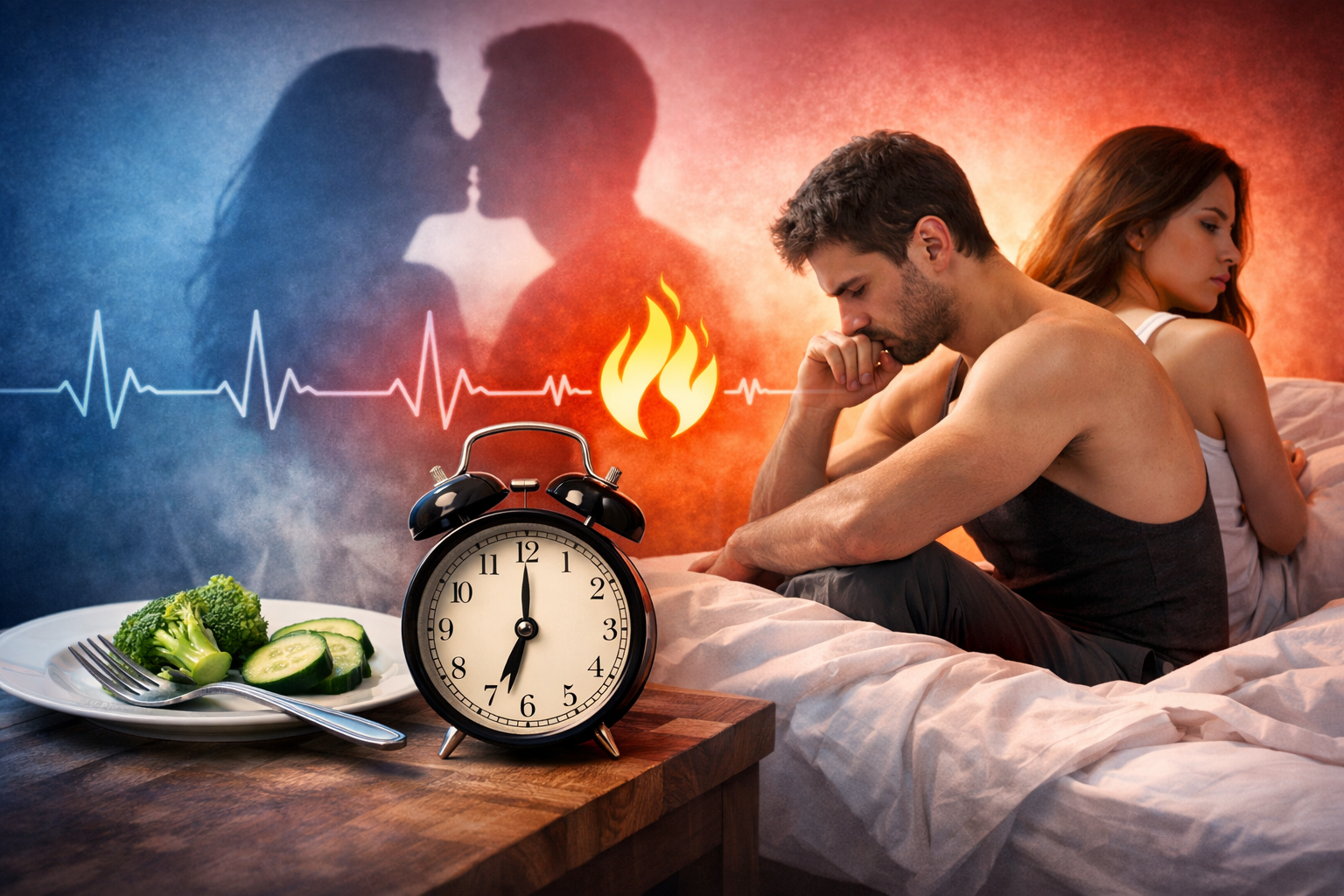
Intermittent fasting can influence libido—but not in a simple “increase or decrease” way. Research suggests fasting may boost sexual behavior in some cases (particularly in animal studies) through changes in brain chemistry, especially reduced serotonin levels. At the same time, fasting can also lower testosterone, disrupt hormones, and reduce sexual desire depending on duration, intensity, and individual health. The real answer lies in balance: fasting affects hormones, metabolism, and neurotransmitters, all of which directly shape sexual desire, performance, and reproductive health.
Introduction: A Surprising Link Between Fasting and Desire
At first glance, diet and sex drive seem like distant cousins. One is about discipline and restriction; the other, instinct and indulgence. But modern research is uncovering a far more intimate relationship between diet and sex drive than most people expect.
Intermittent fasting, once a niche health trend, is now widely practiced for fat loss, metabolic health, and longevity. Yet a growing body of research is asking a more provocative question: what happens to your libido when you stop eating for extended periods?
The answer is anything but straightforward.
The Science Behind Intermittent Fasting and Libido
To understand the connection between intermittent fasting libido changes and sexual performance, you need to look beneath the surface—into the brain, hormones, and evolutionary biology.
A Shift in Sexual Behavior
Recent research has shown that intermittent fasting can significantly alter fasting and sexual behavior—sometimes increasing it.
In controlled studies, fasting was observed to “boost sexual behavior” in male subjects, even when hormone levels didn’t significantly increase.
This challenges the long-held belief that libido is driven purely by testosterone. Instead, it suggests something deeper is at play—something neurological.
The Serotonin Connection
One of the most fascinating discoveries involves serotonin libido suppression.
Fasting reduces levels of tryptophan, an amino acid required to produce serotonin. Lower serotonin levels can lead to:
- Increased sexual motivation
- Reduced inhibition
- Heightened reward-seeking behavior
This creates a direct link between brain serotonin levels sex drive and fasting patterns.
In simple terms:
- Lower serotonin = higher sexual drive (in some cases)
- Higher serotonin = more stability, but potentially reduced libido
This delicate balance between dopamine vs serotonin libido pathways may explain why some people experience a surge in desire during fasting periods.
Hormones: The Double-Edged Sword
While neurotransmitters may enhance desire, hormones tell a more complex story.
Testosterone and Fasting
Testosterone is often considered the cornerstone of male libido. But the relationship between testosterone and fasting is nuanced:
- Short-term fasting may maintain or slightly boost testosterone
- Prolonged fasting can lead to fasting and low testosterone
- Caloric restriction may suppress androgen production
This means that fasting and male sexual function can improve or decline depending on how fasting is implemented.
Key Hormonal Players
Fasting impacts several hormones tied to sexual health:
- Luteinizing hormone (LH) – regulates testosterone production
- Follicle-stimulating hormone (FSH) – linked to fertility
- Cortisol – stress hormone that can suppress testosterone
Changes in these systems highlight the broader role of endocrine changes fasting and hormonal regulation and libido.
Metabolism, Energy, and Reproductive Signals
From an evolutionary perspective, the body treats energy availability as a signal for reproduction.
When calories drop:
- The body may prioritize survival over reproduction
- Libido can decrease due to energy balance reproduction signals
- Or paradoxically increase as part of mating behavior adaptation
This explains why caloric restriction libido effects vary so widely.
Intermittent Fasting and Reproductive Health
The relationship between intermittent fasting and reproductive health becomes even more interesting when aging is considered.
Studies suggest:
- Fasting may improve reproductive success in older individuals (in animal models)
- It may counteract aging and libido decline behaviorally
- It can influence sexual activity frequency and motivation
However, these benefits are not universal—especially in humans.
Does Fasting Affect Libido in Real Life?
So, does fasting affect libido in practical, everyday terms?
The answer depends on several factors:
It May Increase Libido If:
- Fasting is moderate (e.g., 16:8 schedule)
- Nutrient intake remains adequate
- Stress levels are low
- Sleep is optimized
It May Decrease Libido If:
- Fasting is prolonged or extreme
- Calories are too low
- Hormones become imbalanced
- Fatigue increases
This explains the conflicting experiences people report with intermittent fasting sex drive.
The Role of Sexual Performance and Confidence
Libido is only one piece of the puzzle. Sexual health also includes:
- Performance
- Confidence
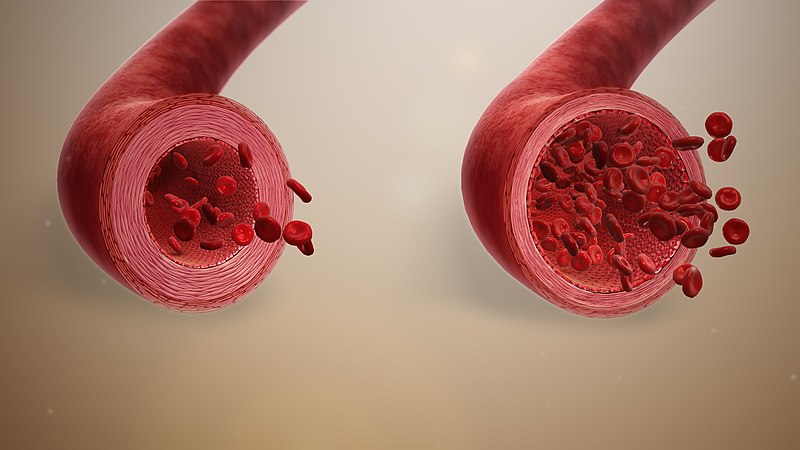
- Blood flow
- Physical response
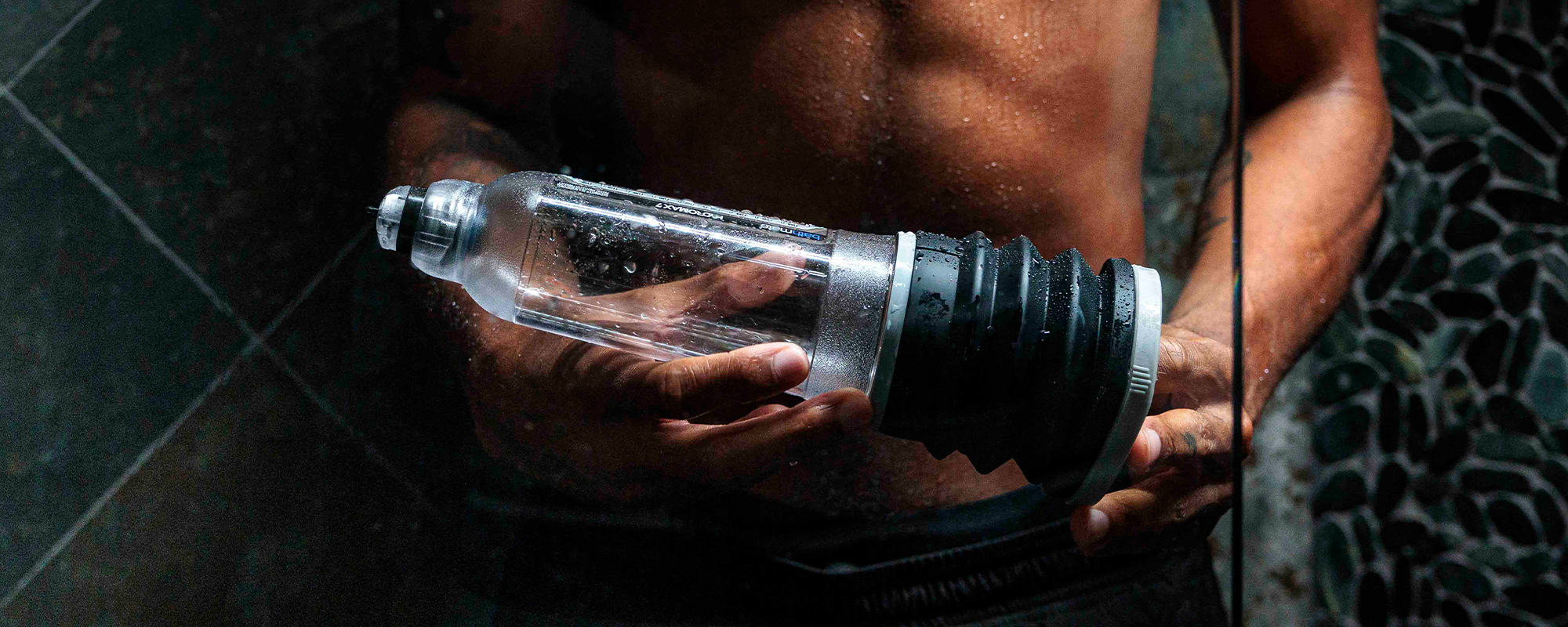
For men looking to support their sexual performance alongside lifestyle habits like fasting, tools designed for enhancement and circulation can play a role.
You can explore options like specialized pumps and systems here:
These products are designed to complement overall fasting and sexual health strategies by supporting blood flow and performance.
A Note on Human Evidence
One critical limitation in this space is the lack of robust human trials.
Most findings around intermittent fasting libido humans are based on:
- Animal studies
- Observational fasting periods (e.g., Ramadan)
- Indirect hormonal research
Interestingly, some human data suggests:
- Reduced libido during fasting periods
- Decreased sexual activity frequency
- Hormonal fluctuations affecting desire
This makes human clinical trials fasting libido an important gap in current research.
Men vs Women: Why Libido Responses Differ
One of the biggest oversights in discussions around intermittent fasting libido humans is the assumption that men and women respond the same way.
They don’t.
Male Response to Fasting
Men tend to be more resilient to short-term fasting due to more stable reproductive signaling. In many cases:
- Intermittent fasting libido increase is reported in early stages
- Dopamine-driven motivation may rise
- Testosterone remains stable (initially)
This is why some men notice improved fasting and male sexual function, particularly when fasting is moderate and paired with strength training.
However, this isn’t universal.
Prolonged or aggressive fasting can lead to:
- Cortisol testosterone suppression
- Reduced androgen production
- Lower sexual performance and energy
Female Response to Fasting
Women are generally more sensitive to energy deficits due to reproductive biology.
With fasting, this can lead to:
- Disruption in fasting and female hormones libido balance
- Changes in ovulation and menstrual cycles
- Reduced sexual motivation
In many cases, the body interprets caloric restriction as an unsafe time for reproduction, directly impacting fasting and sexual desire.
When Fasting Backfires: The Hidden Risks
While fasting can offer benefits, it can also go too far.
Signs Fasting Is Hurting Your Libido
If you’re experiencing any of the following, fasting may be negatively affecting your sex drive:
- Persistent fatigue and low energy
- Decreased sexual activity frequency
- Reduced morning erections
- Low mood or irritability
- Decline in gym performance
These are classic indicators of fasting fatigue libido issues and potential over-fasting and hormone imbalance.
The Hormonal Downside
When fasting becomes excessive, the body shifts into conservation mode:
- Testosterone drops
- Cortisol rises
- Thyroid function may slow
This cascade can result in:
- Fasting and low testosterone
- Reduced erectile function fasting
- Decline in overall sexual performance
Fasting Styles and Their Impact on Libido
Not all fasting protocols are created equal. The way you fast matters just as much as whether you fast.
Common Fasting Methods and Effects
1. 16:8 Time-Restricted Eating
- Most sustainable
- Often supports time-restricted eating sex drive improvements
- Minimal hormonal disruption
2. Alternate-Day Fasting
- More aggressive
- Mixed effects on alternate day fasting libido
- Higher risk of fatigue
3. Extended Fasting (24+ hours)
- Can significantly impact hormones
- Greater chance of fasting duration libido effects being negative
Nutrition Still Rules Everything
Fasting is only half the equation. What you eat determines whether your libido thrives or crashes.
Key Nutrients for Sexual Health
To support nutrition and sexual health, focus on:
- Zinc (testosterone production)
- Healthy fats (hormone synthesis)
- Protein (muscle + metabolic support)
- Micronutrients (overall endocrine function)
Without these, even the best fasting protocol can harm metabolic health and sex drive.
Supporting Blood Flow and Physical Performance
Even with optimal hormones and neurotransmitters, physical performance plays a critical role in sexual health.
Circulation, responsiveness, and confidence all contribute to how libido translates into real-world results.
For men looking to enhance this aspect, targeted tools can support performance alongside lifestyle strategies:
These are designed to complement improvements in fasting and sexual health by supporting blood flow and physical response.
The Psychological Factor: Desire Isn’t Just Physical
Libido isn’t purely biological—it’s psychological too.
Fasting can influence:
- Mood
- Focus
- Confidence
- Reward sensitivity
This ties back to diet-induced behavioral changes, where shifts in brain chemistry affect not just hunger—but desire itself.
In some cases, fasting sharpens focus and drive. In others, it creates stress and fatigue that suppress libido.
Can Fasting Actually Improve Libido Long-Term?
Here’s where things get interesting.
There’s emerging evidence that fasting may:
- Improve insulin sensitivity libido
- Support long-term metabolic health
- Reduce inflammation
- Potentially enhance aging metabolism sexual health
This suggests that, when done correctly, fasting could indirectly support libido over time—even if short-term effects vary.
A Balanced Approach to Fasting and Libido
If your goal is to optimize both health and sex drive, balance is everything.
Practical Guidelines
- Stick to moderate fasting (e.g., 16:8)
- Avoid extreme calorie deficits
- Prioritize sleep and recovery
- Monitor energy, mood, and performance
- Adjust based on how your body responds
Enhancing Results with the Right Tools
Lifestyle changes like fasting are powerful—but combining them with physical enhancement strategies can amplify results.
For those looking to take a more comprehensive approach:
These options are designed to support performance, complementing improvements in fasting and mating behavior and overall sexual health.
A Practical Action Plan for Better Libido While Fasting
By now, it’s clear that intermittent fasting sex drive effects aren’t random—they’re responsive. Your body reacts to how you fast, what you eat, and how well you recover.
Here’s how to take control.
Step-by-Step Optimization
1. Choose the Right Fasting Window
Start with a moderate structure:
- 14:10 or 16:8 fasting window
- Avoid jumping straight into aggressive protocols
- Keep consistency over intensity
This approach supports fasting and sexual health without overwhelming your endocrine system.
2. Prioritize Nutrient Density
Fasting without proper nutrition is one of the fastest ways to destroy libido.
Focus on:
- Healthy fats (support androgens and libido)
- Zinc-rich foods (testosterone support)
- Protein (recovery and hormone stability)
This directly improves diet and sex drive, ensuring your body has the building blocks for sexual function.
3. Train Smart, Not Excessively
Exercise amplifies the effects of fasting—for better or worse.
- Strength training supports testosterone
- Overtraining increases cortisol
- Balance is key for energy balance reproduction signals
4. Track Your Body’s Signals
Instead of guessing, watch for patterns:
- Changes in sexual desire
- Energy levels throughout the day
- Sleep quality
- Mood and motivation
Your body will tell you whether your approach to fasting and sexual behavior is working—or not.
Common Mistakes That Kill Libido
Even well-intentioned fasting routines can backfire.
Mistake #1: Fasting Too Aggressively
Long fasting windows without adaptation can lead to:
- Fasting duration libido effects turning negative
- Hormonal disruption
- Chronic fatigue
Mistake #2: Ignoring Calories
Undereating is one of the biggest drivers of:
- Caloric restriction libido decline
- Reduced testosterone
- Poor recovery
Mistake #3: Neglecting Sleep
Sleep is where hormone regulation happens.
Without it:
- Testosterone drops
- Cortisol rises
- Libido suffers
This directly impacts hormonal regulation and libido, regardless of diet.
Mistake #4: Overlooking Stress
Fasting is a stressor. Add life stress on top, and the effects multiply.
Chronic stress leads to:
- Elevated cortisol
- Suppressed reproductive hormones
- Reduced sexual motivation
The Missing Link: Blood Flow and Physical Readiness
Even when desire is present, performance depends on physical readiness.
Libido without proper blood flow and responsiveness can feel frustrating and incomplete.
Supporting erectile function fasting outcomes requires attention to circulation and conditioning—not just hormones.
For those looking to bridge that gap, targeted solutions can help enhance physical response alongside lifestyle improvements:
These tools are often used to complement improvements in fasting and male sexual function, especially when paired with consistent routines.
A Realistic Expectation: What Should You Feel?
When fasting is working with your body—not against it—you’ll typically notice:
- Stable or increased sexual desire
- Better energy and focus
- Improved confidence
- Consistent performance
When it’s not working:
- Desire drops
- Fatigue increases
- Performance becomes inconsistent
Understanding this difference is key to navigating intermittent fasting and reproductive health effectively.
The Bigger Picture: Short-Term vs Long-Term Effects
One of the most important distinctions is timing.
Short-Term Effects
- Changes in neurotransmitters and sexual behavior
- Possible spikes in motivation or desire
- Fluctuations in energy
Long-Term Effects
- Improved metabolic health and sex drive (if done correctly)
- Better insulin sensitivity
- Reduced inflammation
- Potential support for male fertility and fasting outcomes
However, long-term benefits only happen when fasting is sustainable.
The Human Gap: What We Still Don’t Know
Despite promising findings, there are still unanswered questions.
Research on intermittent fasting libido women and men in real-world settings is limited. Much of what we know comes from:
- Animal studies
- Short-term human observations
- Indirect hormonal data
This makes personal experimentation—and awareness—even more important.
Final Takeaway
So, is intermittent fasting affecting your sex drive?
Yes—but it’s not inherently good or bad.
It’s a tool.
Used correctly, it can:
- Enhance fasting and sexual desire
- Support long-term health
- Improve confidence and performance
Used incorrectly, it can:
- Suppress hormones
- Reduce libido
- Impact overall well-being
FAQ: Intermittent Fasting and Sex Drive
1. Can intermittent fasting increase libido without increasing testosterone?
Yes. Libido isn’t driven by testosterone alone. Changes in neurotransmitters and sexual behavior, particularly reduced serotonin and increased dopamine sensitivity, can boost desire even when testosterone stays the same.
2. How long does it take for fasting to affect sex drive?
It varies. Some people notice changes in intermittent fasting sex drive within a few days, especially due to shifts in energy and brain chemistry. Hormonal changes, however, may take weeks to develop.
3. Does intermittent fasting affect morning erections?
It can. Morning erections are closely tied to testosterone and sleep quality. If fasting negatively impacts recovery or hormone levels, you may notice a decline. Conversely, improved metabolic health can enhance them.
4. Is intermittent fasting bad for libido in the long term?
Not necessarily. When done correctly, it may support metabolic health and sex drive. But prolonged calorie restriction or poor nutrition can lead to fasting and low testosterone, reducing libido over time.
5. Can fasting improve erectile quality?
In some cases, yes. Improved circulation and insulin sensitivity can benefit erectile function fasting outcomes. However, excessive fasting may reduce performance if energy and hormones drop too low.
6. Does body fat percentage affect how fasting impacts libido?
Absolutely. Very low body fat can reduce hormone production, while higher body fat can impair testosterone and blood flow. Finding a healthy balance is key for fasting and sexual health.
7. Should you avoid fasting on days you plan to have sex?
Not necessarily, but it depends on how your body responds. Some people feel more energized and focused while fasting, while others experience fatigue. Monitoring your own sexual performance patterns is important.
8. Can intermittent fasting affect fertility?
Potentially. Moderate fasting may support male fertility and fasting outcomes through improved metabolic health. However, extreme fasting can disrupt hormones involved in reproduction, affecting fertility negatively.
9. Does fasting impact libido differently based on age?
Yes. Younger individuals may tolerate fasting better, while older individuals experiencing aging and libido decline may see either improvements or further suppression depending on how fasting is managed.
10. What’s the best fasting schedule to maintain a healthy sex drive?
For most people, a moderate approach like 14:10 or 16:8 works best. These schedules support fasting duration libido effects that are less likely to disrupt hormones while still offering metabolic benefits.


Share:
When Your Libido Disappears: Psychological Causes of Low Desire
6 esercizi quotidiani facili per uomini impegnati: erezioni più forti